
Promoted by Rakesh Sharma
"Doing my bit to promote the most beautiful religion in the world."
View Full Profile →Sanatana Dharma: The Eternal Way of Truth & Cosmic Law
To understand what is hinduism requires an exhaustive exploration of the world's oldest spiritual tradition—its metaphysical worldview, philosophical schools, ethical ideals, sacred literature, and paths to self-realization.
1. What is Sanatana Dharma?
The designation "Hinduism" is historically an exonym. It originated as a geographic identifier used by ancient Persians, Greeks, and Arabs to refer to the land, culture, and people living beyond the Sindhu (Indus) River. Within its original Sanskrit literature, however, the tradition identifies itself as Sanatana Dharma.
The Sanskrit word Sanatana signifies that which is timeless, eternal, uncreated, and universally applicable. Dharma derives from the Sanskrit root dhri, which means "to hold, uphold, or sustain." Therefore, Sanatana Dharma translates to "The Eternal Law" or "The Natural Order"—representing the inherent cosmic principles that sustain the universe, maintain moral order, and guide conscious beings toward spiritual fulfillment.
Unlike doctrines defined by a single prophet or historical event, Sanatana Dharma views cosmic reality as an ongoing, cyclical process. Creation undergoes repeating epochs (Yugas), moving through phases of emergence, preservation, and dissolution (Srishti, Sthiti, and Laya), governed by the cosmic dance of the Divine.
2. Metaphysics: Brahman & Atman
The metaphysical foundation of Sanatana Dharma centers around two ultimate spiritual realities:
Brahman (Ultimate Consciousness)
The supreme, infinite, formless, and unchanging reality that underlies all existence. Brahman is described as Sat-Chit-Ananda (Absolute Existence, Pure Consciousness, and Supreme Bliss).
Atman (The True Self)
The divine, immortal spirit within every individual living being. Atman is untouched by birth, physical death, or mental modifications.
Different philosophical schools interpret the relationship between Atman and Brahman uniquely. Non-dualistic Advaita Vedanta asserts that Atman and Brahman are completely identical, while qualified non-dualism (Vishishtadvaita) and dualism (Dvaita) view the soul as a eternal part or distinct servant of the Supreme Lord.
3. Religion, Philosophy, or Way of Life?
Sanatana Dharma is simultaneously a philosophy, a lifestyle, and a religion. It accommodates various levels of inquiry and spiritual maturity:
Philosophical Inquiry
Expressed through the Shad-Darshanas (Six Classical Systems): Nyaya, Vaisheshika, Samkhya, Yoga, Mimamsa, and Vedanta.
A Practical Way of Life
Encourages daily ethical living, Sattvic Diet, life-stage duties (Varnashrama Dharma), and life-cycle rituals (Samskaras).
Religious Devotion
Embraces loving devotion (Bhakti Movement), temple rituals (Puja & Yajna), sacred chants (Mantras), and pilgrimages (Tirthayatra).
4. The Four Purusharthas (Human Goals)
To ensure balanced psychological, physical, and spiritual development, Sanatana Dharma defines four essential human pursuits known as the Purusharthas:
The overarching ethical compass. It guides moral responsibility, social duty, truth, and cosmic order.
The legitimate acquisition of material wealth, career success, and financial security to sustain one's family and support society.
The healthy enjoyment of life, love, family, art, music, and physical joy within the bounds of Dharma.
The supreme goal—transcending material attachments to achieve self-realization and eternal freedom from rebirth.
5. The Four Paths of Yoga
Understanding that individual personalities differ, Sanatana Dharma provides four primary spiritual paths (Yogas) to attain union with the Divine:
Jnana Yoga
Path of KnowledgeUtilizes intellect, contemplation, and study of the Upanishads to discern real from unreal (*Neti Neti*).
Bhakti Yoga
Path of DevotionChannels love and emotional devotion toward divine forms like Krishna, Shiva, or the Divine Mother.
Karma Yoga
Path of ActionPerforming duties selflessly without ego, expectation, or attachment to results (Nishkama Karma).
Raja Yoga
Path of MeditationThe eight-fold royal path (Ashtanga Yoga) formulated by Sage Patanjali to master mind and energy.
6. Karma, Samsara & Reincarnation
Central to Hindu worldview are the universal laws of cause, effect, and spiritual evolution:
- Law of Karma: Every physical, verbal, or mental action creates an equal resonance. Thoughts and actions generate seeds that ripen into future experiences across life journeys.
- Samsara (Cycle of Rebirth): The continuous cycle of birth, death, and rebirth driven by unfulfilled desires and karmic impressions (*Samskaras*).
- Punarjanma (Reincarnation): The soul (*Atman*) changes physical bodies over lifetimes just as a person discards old garments for new ones (as explained in the Bhagavad Gita).
7. Core Virtues & Ethical Pillars
Ethical purity forms the prerequisite for spiritual wisdom. Key foundational virtues include:
Satya (Truth)
Uncompromising truthfulness in thought, word, and action.
Ahimsa (Non-violence)
Refraining from causing harm to any living creature.
Daya (Compassion)
Active empathy and service toward all beings across nature.
Asteya (Non-stealing)
Respecting others' property, time, and efforts without greed.
8. Sacred Textual Literature
The sacred canonical library of Sanatana Dharma is classified into two major categories:
Shruti ("That Which Is Heard")
Divinely revealed truths perceived directly by ancient Seers:
- The Four Vedas: Rigveda, Samaveda, Yajurveda, Atharvaveda
- The Upanishads: Philosophical texts like Kena, Katha, Chandogya, and Brihadaranyaka
Smriti ("That Which Is Remembered")
Traditions and epic narratives composed to guide daily conduct:
- Epics (Itihasa): Ramayana and Mahabharata
- Sacred Discourse: Bhagavad Gita
- Puranas: Texts like Srimad Bhagavatam and Vishnu Purana
🕉️ Conclusion: Understanding what is hinduism and Its Eternal Wisdom
In summary, exploring what is hinduism reveals a profound spiritual tradition originally known as Sanatana Dharma. Anyone asking what is hinduism discovers that it is both a philosophy and a practical way of life. Studying what is hinduism helps seekers understand the ultimate unity of Brahman and Atman. Truly, understanding what is hinduism clarifies how cosmic principles sustain moral order in the universe. Through exploring what is hinduism, ancient realized truths illuminate daily living.
From the four Purusharthas to the paths of Yoga, learning what is hinduism offers balanced guidance for human development. Reflecting on what is hinduism shows how the law of Karma shapes soul evolution across lifetimes. Every text detailing what is hinduism inspires compassion, non-violence, and self-realization. Thus, contemplating what is hinduism brings lasting emotional peace and spiritual clarity. Indeed, understanding what is hinduism connects human life with universal harmony.
- ✦ Discovering what is hinduism emphasizes timeless principles of moral duty and self-governance.
- ✦ Four distinct paths of Yoga illustrate what is hinduism regarding diverse temperaments and spiritual needs.
- ✦ Learning what is hinduism provides deep perspective on reincarnation, karma, and ultimate liberation.
- ✦ Vedas and Upanishads explain what is hinduism through divinely revealed spiritual truths.
Whether contemplating the immortal soul or practicing selfless action, studying what is hinduism enriches your spiritual quest. Understanding what is hinduism allows ancient Vedic wisdom to guide modern decisions with ethical strength.
We hope this comprehensive compendium on what is hinduism deepens your philosophical perspective. May your journey into what is hinduism bring divine light, peace, and self-knowledge as you explore what is hinduism throughout your spiritual journey.
Promote Hinduism
Support and spread the eternal wisdom of Sanatana Dharma across the globe.
Learn MoreSanatan Ebooks
Explore our sacred collection of scriptures, spiritual guides, and digital books.
Browse EbooksSponsor Sacred Knowledge
Help preserve and spread timeless spiritual teachings to seekers worldwide.
Sponsor Now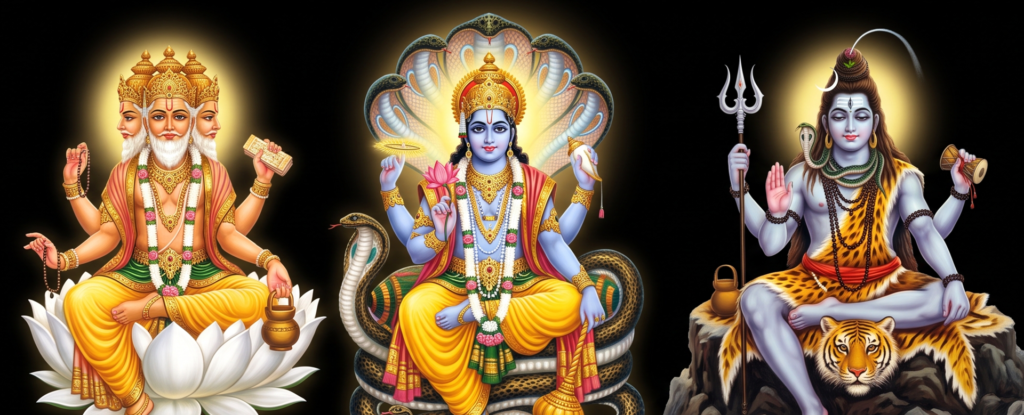
Topics Covered
Toggle